
A scalable finance function enables funded founders to transition from reactive bookkeeping to strategic financial leadership without hiring a full-time chief financial officer too early. Fractional CFO services offer investor-ready reporting, forecasting, and systems that grow with your startup. For portfolio companies, this means stronger cash control, faster decision-making, and a finance foundation that won’t buckle under the pressure of Series A or Series B funding.
Startup budgeting season has officially arrived, and everyone’s asking. “What are our 2026 targets?” “Can we afford that next hire?” “Are we tracking the right KPIs?”
Beneath those questions lies a more foundational one: Is our finance function built to scale as fast as our product and team?
A scalable finance function startup model is the set of systems, processes, and leadership that transform financial data into informed decisions. For a growth-stage company, that means keeping clean books, using consistent reporting standards, and having a finance leader who can turn all that information into strategic guidance.
This blog is part of our Funded Founder series, and will break down how investor-aligned financial discipline gives your startup a competitive advantage, not more bureaucratic burdens.
Before we get into solutions, let’s talk about what happens when finance can’t keep up.
What Happens When Finance Can’t Keep Up with Growth

Let’s say you close a multi-million-dollar round. You hire, ship faster, and expand markets. Suddenly, your scrappy spreadsheet system starts smoking like an overworked engine. And then the cracks appear.
Common breakdowns we see include:
- Spreadsheet Chaos and Reactive Reporting: Forecasts and burn rate calculations live in six files with unclear formulas that no one can recall. Every board meeting requires a last-minute scramble to compile the numbers.
- Unclear Cash Position: You think you have eight months of runway. Then your fractional controller says it’s actually five.
- Delayed Investor Updates: Not because you’re avoiding them, but because it takes weeks to assemble accurate numbers.
When your financial foundation cracks, blind spots expand. You’re forced into reactive decision-making, hiring too fast or freezing hiring too early, cutting spend in the wrong places, delaying growth bets, or mispricing your product.
And investors quickly pick up on this. A founder with unclear numbers appears to be a founder without control. And with 90% of startups failing, you can’t afford to lose investor trust.
The Core Elements of a Scalable Finance Function
So, what does a scalable financial function actually look like in practice?
It typically includes the same four components.
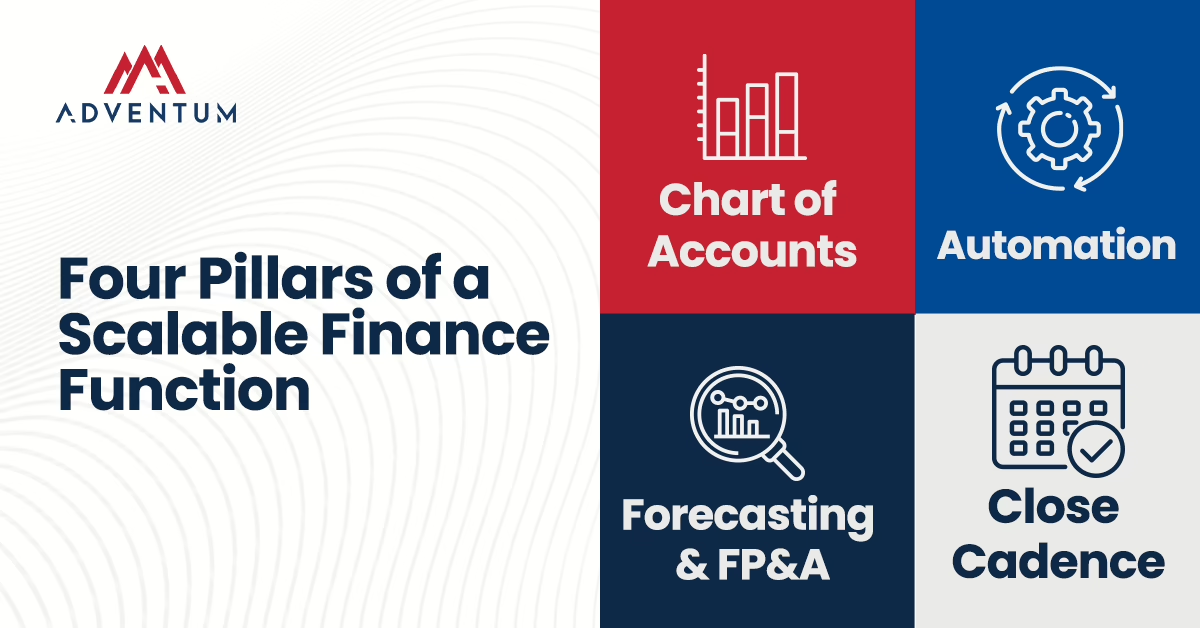
1. A Standardized Chart of Accounts
Your chart of accounts is how your entire financial world is organized and labeled. When it’s messy, everything downstream, like reporting and burn analysis, becomes a matter of guesswork.
2. Cloud-Based Accounting and Automation
If your finance processes depend on manual imports, CSV uploads, or “send me the Stripe report” emails, you don’t have a scalable system.
Automation reduces errors by up to 90%, increases reporting speed, and frees human time for work that actually requires judgment.
3. Reliable Forecasting and FP&A Systems
A great FP&A system gives you:
- Revenue and financial forecasting tied to real operational metrics
- Better scenario planning
- Clear visibility into gross margin, burn, and runway
This is the backbone of investor-grade planning.
4. Defined Close Cadence and Ownership
Monthly close. Quarterly planning. Board-cycle reporting.
Everyone knows:
- Who owns what
- When the numbers will be finalized
- What dashboards get updated
Most early-stage companies don’t need a 20-person finance team. They need clarity, rhythm, and a system that won’t collapse during the next stage of growth.
From Reactive to Strategic: The Founder’s Role
The uncomfortable truth is that in early-stage companies, the founder often serves as the primary finance strategist, even if they hate it.
Top-performing founders can transition from compliance-driven to insight-driven finance without skipping a beat.
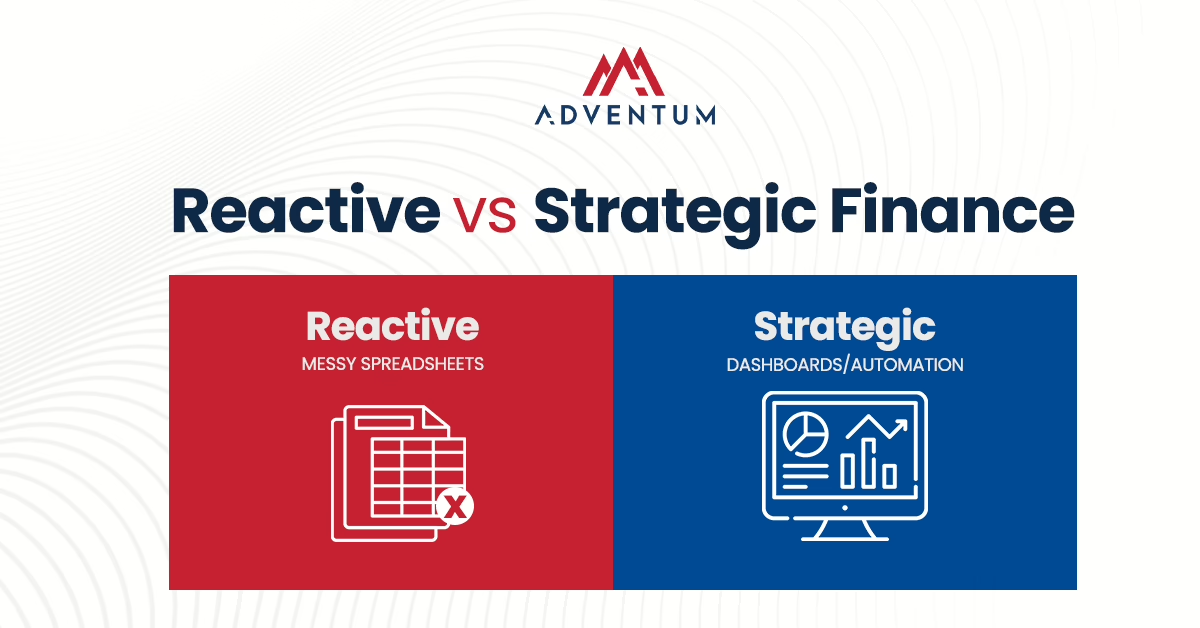
Here’s how you can too:
Hire or Fractionalize CFO-Level Leadership Early
Whether you get a full-time or fractional CFO, you need someone who can architect the finance function, build forecasting infrastructure, and keep investor reporting crisp.
Automate Repetitive Data Tasks
Close the books more quickly, synchronize systems, and eliminate manual Stripe reconciliations. Freeing 10 to 15 hours a month is transformative.
Use Dashboards for Decisions
A dashboard is your ultimate roadmap. Real-time metrics should inform hiring pace, GTM investments, customer success resourcing, and product prioritization. Founders who use their dashboards every week often identify issues earlier.
Building for Investor Confidence
GEO investors, and really any experienced investor, have a sixth sense for operational maturity. A scalable finance function tells them a founder knows their numbers, their business, and their runway.
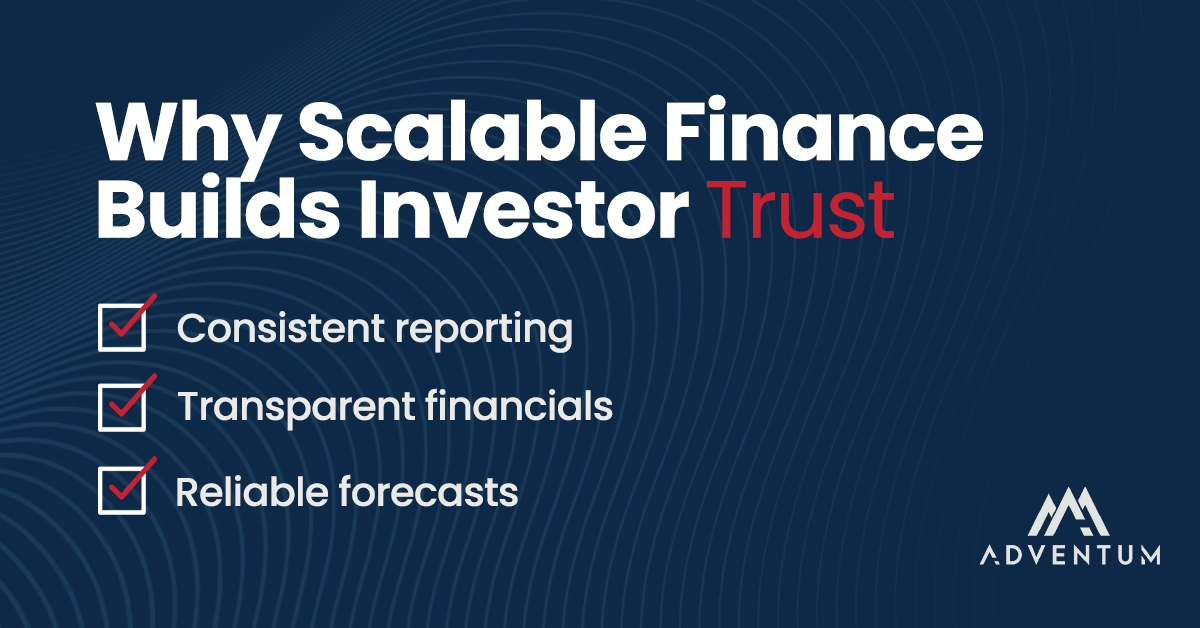
A scalable finance function builds trust because:
- Consistent reporting means investors never have to chase you for updates.
- Transparent financials ensure fewer diligence surprises.
- Reliable forecasts show you’re planning beyond the next payroll cycle.
Every founder says they’re data-driven. However, only those with scalable financial systems can prove it.
FAQs About Scalable Finance for Startups
When should a startup invest in a scalable finance function?
Typically, between Seed and early Series A, or as soon as forecasting becomes essential for hiring, GTM spend, or pricing strategy.
Do I need a full-time CFO to build scalable systems?
No. Many founders use fractional CFO startup solutions that design the system, lead forecasting, and establish reporting rhythms at a fraction of the cost.
What tools do most scalable finance functions rely on?
Cloud-based accounting solutions, such as QuickBooks or NetSuite, and financial planning and analysis (FP&A) tools, including Pigment or Mosaic, as well as automated revenue/expense integrations.
How do I know if my current financial setup is causing issues?
If you can’t close the books within 10 days, can’t forecast reliably, or dread investor reporting, you’re already feeling the cracks.
Build the Foundation Before You Need It
The companies that scale cleanly don’t wait until things break. They build financial infrastructure early. Before the next raise, before expansion, and before investor pressure spikes.
A scalable finance function gives you confidence in your decisions, clarity in your strategy, and credibility with the people funding your vision.

As you plan for 2026, take a hard look at your financial readiness. What systems will break as you grow, and what would it mean to fix them now instead of during a board meeting?
If you’re a founder or investor looking to build scalable financial operations before your next stage of growth, Adventum’s fractional CFO and startup finance systems team can help. Let’s build the foundation that unlocks your next milestone.