
Companies earn long term investor confidence through clear consistent and decision focused financial reporting.
Imagine you’re sitting in your favorite coffee shop with some founders and investors you know. The conversation starts casually enough with fundraising horror stories and board dynamics. Inevitably, someone pipes up, “We didn’t lose investor trust because of performance. We lost it because they didn’t know what was really going on.”
Financial reporting is a trust mechanism. Investors need clarity, consistency, and credibility. The companies that earn long-term investor confidence are those that create repeatable financial visibility.
Here’s a practical breakdown of investor financial reporting best practices, including what works, what breaks trust, and how to build reporting that scales with your portfolio and your ambition.
What Investor Financial Reporting Best Practices Look Like
Let’s start with what good actually looks like in the real world.
Strong investor reporting is all about decision usefulness:
Consistent Metrics with Standardized Definitions
Revenue means the same thing every month. Gross margin doesn’t change based on who’s presenting. KPIs are defined once and used everywhere.
Decision-Focused Reporting
Numbers are explained, not dumped. Reports highlight why performance changed, not just that it changed. Investors understand the operational drivers behind results.
Timely Delivery with Predictable Close Cycles
Reports arrive when expected. There’s a cadence, such as monthly close, quarterly, or deep dives, and no surprises about timing.
Comparable Reporting Across Portfolio Companies
Especially at the fund level, consistency enables benchmarking. Investors can quickly identify outliers, risks, and opportunities.
Investor confidence is built through clarity and consistency, not reassurance. Strong financial reporting enhances trust, credibility, and strategic planning.
Common Investor Financial Reporting Problems That Reduce Trust
Most trust issues come from systems that never matured past the early startup stage. In fact, one of the top reasons nine out of 10 startups fail is poor financial management and reporting.

Inconsistent Metrics Across Portfolio Companies
This is one of the fastest ways to undermine investor confidence.
- Revenue is defined differently across companies
- Gross margin calculated inconsistently
- Custom KPIs with no shared framework
This results in a limited ability to benchmark performance or spot trends. Investors spend meetings reconciling definitions instead of discussing strategy.
Backward-Looking Financial Reports
Historical income statements alone don’t answer investor questions.
- No forecast vs. actual analysis
- No cash runway visibility
- No sense of where the business is heading
Reporting that only looks backward offers more questions than answers.
Founder-Dependent Financial Reporting
This one is especially risky.
- Manual spreadsheets
- One-off processes
- Reporting knowledge trapped in a founder’s head
When founders handle financial reporting without support, key-person risk skyrockets. As companies scale, this becomes a governance and operational problem.
Financial Metrics Investors Expect at Each Portfolio Stage
As companies mature and investor expectations evolve, reporting must adapt accordingly.
Early Stage and Growth Stage Companies
At this stage, investors focus on survival and efficiency.
- Cash burn rate and runway
- Burn multiple and revenue efficiency
- Revenue concentration and growth quality
Clarity reduces panic and enables proactive decision-making.
Scaling and Platform Companies
As complexity increases, investors expect more rigor.
- Gross margin stability
- Forecast accuracy and variance tracking
- Working capital efficiency
At this stage, reporting quality often becomes a proxy for leadership maturity.
Portfolio-Level Investor Metrics
From the fund perspective, aggregation matters.
- Normalized EBITDA
- Cash conversion and liquidity
- Early risk indicators and trend analysis
These metrics allow investors to manage the portfolio as a system.
How CFO-Led Financial Reporting Improves Investor Confidence
This is typically the turning point.
When CFO-level oversight is in place, reporting quickly becomes more strategic:
- Reporting moves from historical to looking towards the future
- Financial results are explained with operational context
- Investors receive early signals, not last-minute surprises
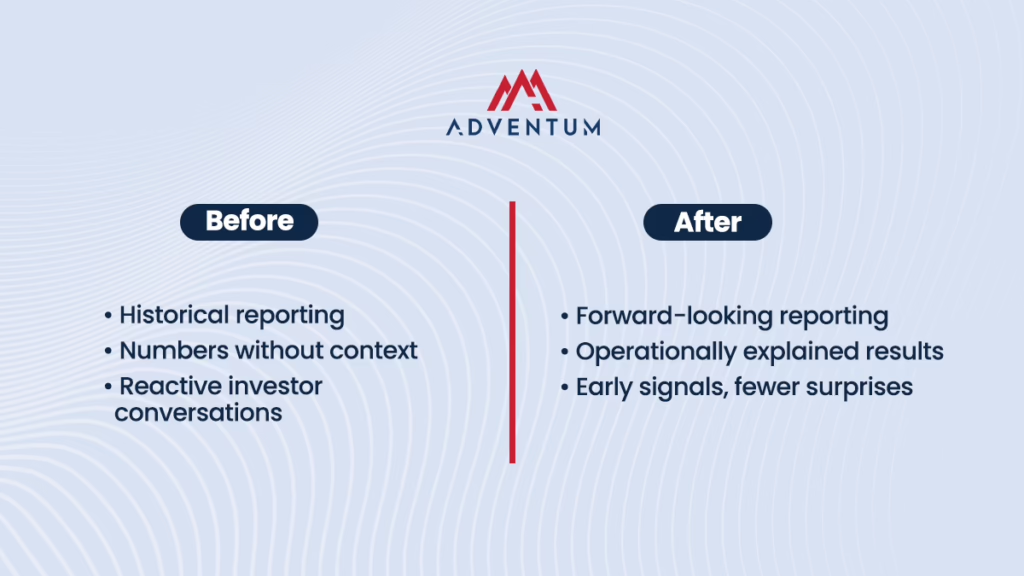
A CFO can better interpret numbers, stress-test them, and connect them to strategy. That’s why 61% of companies are outsourcing their operations to fractional CFOs when they need investor-grade reporting discipline without a full-time hire.
How to Build a Scalable Investor Financial Reporting Framework
Your goal should be repeatability.
Ensure your reporting systems always use these five components:
- Standard Chart of Accounts: This creates consistency across time and entities.
- Defined Financial Ownership and Accountability: Someone is responsible for the numbers and the narrative behind them.
- Monthly Close and Reporting Cadence: Predictability builds trust more than speed alone.
- Rolling Forecasts and Scenario Planning: Investors want to see how leadership thinks about uncertainty.
- Variance Analysis Standards: Every deviation must have an explanation.
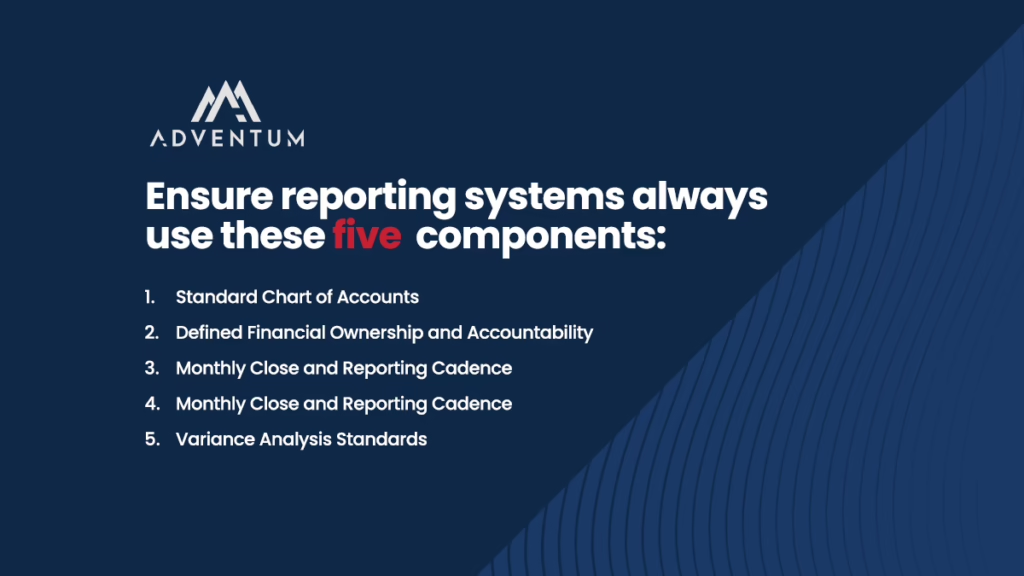
Building this kind of framework requires intentional systems and processes, helping to build scalable finance functions that grow with your startup.
Why Strong Financial Reporting Improves Exit Outcomes
Unfortunately, this part often gets overlooked until it’s too late.
Buyers always evaluate how results are produced. Strong financial reports improve outcomes because they:
- Mitigate diligence risk
- Reduce potential delays
- Support stronger valuations
Deals can slow down or fall apart because the financial story wasn’t reliable. Strong reporting shortens diligence cycles and keeps leverage where it belongs: with the seller.
What Investors Should Expect From Portfolio Company Financial Reporting
From an investor perspective, setting expectations early matters. Strong funds expect:
- Consistent reporting across all holdings
- CFO-level oversight early in the lifecycle
- Predictable timelines and actionable insights
Portfolio-wide standards free founders from reinventing the wheel. Many funds now support portfolio companies with CFO services, recognizing the value they create.
FAQ: Investor Financial Reporting Best Practices
What are investor financial reporting best practices?
They include consistent metrics, standardized definitions, timely delivery, forward-looking insights, and clear explanations of performance drivers.
How often should portfolio companies report to investors?
Most investors expect monthly financials with quarterly deep dives, including forecasts and variance analysis.
What role does a CFO play in investor financial reporting?
A CFO ensures accuracy, consistency, and strategic interpretation of financial data, turning numbers into insights investors can trust.
How does financial reporting impact valuation and exits?
Strong reporting reduces diligence risk, builds buyer confidence, and often supports higher valuations and smoother transactions.
Building Investor Trust Through Financial Reporting
Building trust begins with how consistently and clearly a company tells its financial story.
Financial reporting is one of the most controllable levers founders and investors have. When done well, it enables better decisions, stronger relationships, and long-term value creation.
CFO-led reporting makes investors more comfortable and companies better. And in the long run, that’s what trust is really built on.