
SaaS companies eventually hit a threshold where accounting can no longer support strategic decisions. When pricing models, growth scenarios, or market expansion require forward-looking analysis, Financial Planning and Analysis (FP&A) becomes essential for understanding the financial impact before committing resources.
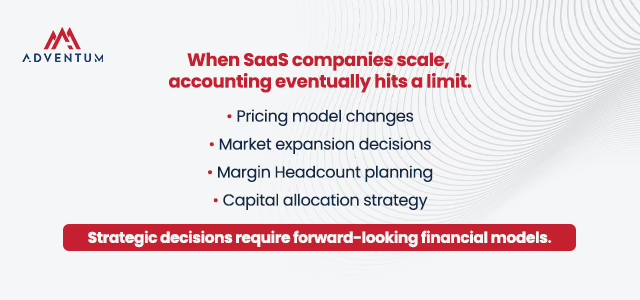
SaaS companies at scale need Financial Planning & Analysis (FP&A), not better accounting when strategic decisions like pricing model changes outpace their accounting team’s capabilities. FP&A builds dynamic models that project growth scenarios before you commit capital to a strategic shift.
The Revenue Threshold Problem
Josh Brown had built PowerDetails from the ground up since 2006. The SaaS platform was growing. Revenue was increasing. But when he looked at the next 18 months, he faced a question his accounting team couldn’t answer:
“We want to transition from subscription pricing to usage-based. What does that do to our growth trajectory?”
His accounting team could tell him what happened last month. They couldn’t model what would happen if he changed his entire pricing model.
This is the inflection point most SaaS founders hit at scale: Your business has reached revenue levels where you require greater financial governance than your accounting team can provide.
The Difference Between Accounting and FP&A
The moment you need to make a strategic decision that impacts your business model, you discover that accounting and financial planning are not the same function.
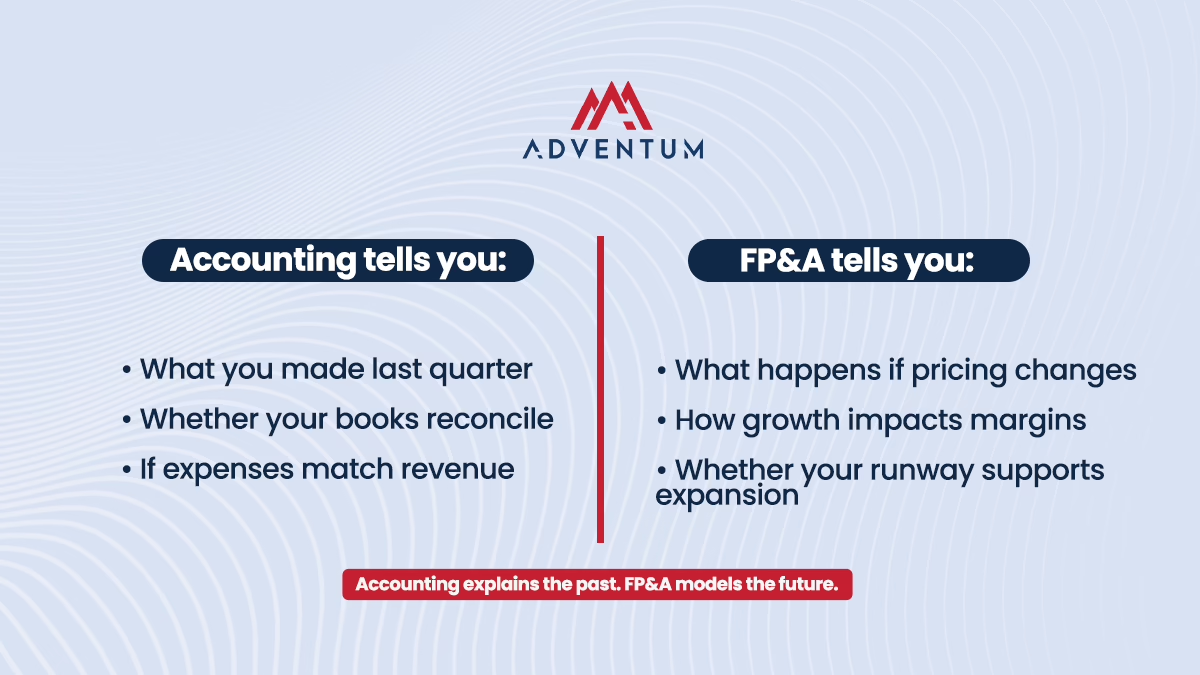
Accounting tells you:
- What you made last quarter
- Whether you’re paying bills on time
- If your books reconcile
Financial Planning & Analysis (FP&A) tells you:
- What happens to margins if you shift from subscription to usage-based pricing
- How resource allocation impacts your growth trajectory
- Whether your current burn rate supports your expansion plan
The companies that confuse these two functions make strategic decisions (pricing model changes, market expansion, headcount planning) without understanding the relative impact of key inputs on growth scenarios..
Why an Individual CFO Hire Can’t Solve This
When Josh realized PowerDetails needed FP&A capabilities, the default path was clear: hire a CFO.
Here’s the constraint: PowerDetails gained greater perspective and investor traction through the outsourced Adventum team approach than would be possible with an individual CFO hire.
Many SaaS companies address this gap through fractional CFO services, which provide strategic finance leadership and FP&A expertise without relying on a single executive hire.
Why? Because FP&A at this stage isn’t a single-person job—it requires:
- Deep experience across a wide array of industries and disciplines
- The ability to build dynamic models (not just static spreadsheets)
- Benchmarking data from comparable companies at similar stages
An individual CFO hire brings one perspective. A fractional team brings several sets of eyes with deep experience across different growth scenarios.
What Dynamic Financial Modeling Actually Delivers
When Adventum engaged with PowerDetails, the deliverable wasn’t “cleaner books”—it was a transformation from spreadsheets into a dynamic, working model of the business.
The difference:
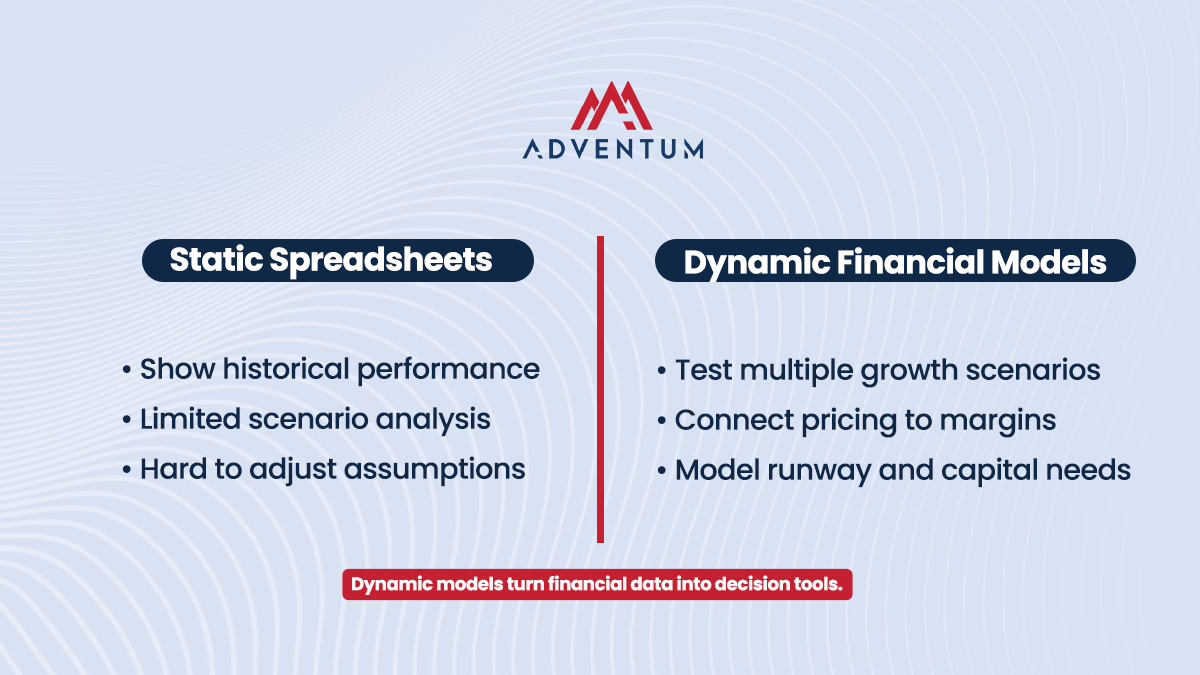
- Spreadsheets show you what happened
- Dynamic models let you test what will happen under different scenarios
Specifically, Adventum:
Analyzed business framework, operations, cash flows, and critical factors to success
→ Not just revenue and expenses, but the actual drivers: margins, operating expenses, and cash burn
Built a dynamic model that examines the relative impact of key inputs
→ What happens to cash burn if you change your pricing model? How does that impact runway?
Equipped the CEO with tools to manage sales
→ Connected high-level strategy (usage-based pricing) to line-level tactics (sales management)
Benchmarked the plan and guided the pricing model transition
→ Not just “here’s a model,” but active guidance through the actual business model changeThe result: PowerDetails could answer the question, “What does our growth trajectory look like if we transition to usage-based pricing?” before they pulled the trigger.
Why FP&A Is a De-Risking Tool for Strategic Decisions
Most founders treat FP&A as a “nice to have” for board meetings. The actual insight: FP&A is what lets you make structural business model changes (like pricing transitions) without gambling your runway.
Josh told Adventum: “We wanted to grow with the same discipline as a venture-backed business.”
Translation: Venture-backed businesses don’t make strategic decisions based on intuition—they model the financial impact first, then execute with confidence.
PowerDetails wasn’t venture-backed, but they wanted that same discipline: the ability to project growth scenarios before committing capital and operational resources to a strategic shift.
When SaaS Companies Need FP&A Support
The need for FP&A hits when you want to make a strategic decision and realize your accounting team can’t model the financial impact.
If you’re at revenue levels where you’re considering:
- Pricing model changes (subscription to usage-based, tiering adjustments)
- Market expansion (new verticals, geographic markets)
- Significant operational shifts (insourcing, outsourcing, M&A)
…and your accounting team can’t answer “What does this do to our margins, cash burn, and growth trajectory?”—you’ve hit the FP&A threshold.
The Bottom Line for SaaS Founders
PowerDetails’ case shows the actual value proposition: You don’t need FP&A to report what happened last quarter. You need FP&A to model what will happen if you change your business model.
The companies that scale with discipline aren’t the ones with the most sophisticated accounting—they’re the ones that model the financial impact of strategic decisions before executing them.
As companies reach this stage, leadership teams also begin tracking startup financial KPIs that reveal how pricing, growth, and operational decisions affect margins and long-term trajectory.
If you’re considering a pricing model transition, market expansion, or other structural business change, ask yourself: Can your current finance function model what happens to margins, cash burn, and growth trajectory under different scenarios?
If the answer is no, you’re making strategic decisions without understanding their financial impact.
That’s not discipline. That’s a bet.
FAQ: Financial Planning & Analysis for SaaS Companies
What’s the difference between accounting and FP&A?
Accounting reports historical data—what you made last quarter, whether books reconcile. FP&A (Financial Planning & Analysis) builds forward-looking models that project performance under different scenarios, such as pricing changes or market expansion.
When does a SaaS company need FP&A instead of accounting?
When you’re making strategic decisions (pricing model changes, market expansion, operational shifts) and your accounting team cannot answer “What does this do to our margins, cash burn, and growth trajectory?” This typically occurs when you reach revenue levels requiring greater financial governance than your accounting team can provide.
Should I hire a full-time CFO for FP&A capabilities?
PowerDetails “gained greater perspective and investor traction through the outsourced team approach than would be possible with an individual CFO hire.” FP&A at scale requires multiple perspectives, industry benchmarks, and experience across different growth scenarios—capabilities that a fractional team delivers more effectively than a single hire.
What’s the difference between spreadsheets and dynamic financial models?
Spreadsheets show what happened (static). Dynamic models test what will happen under different scenarios—examining the relative impact of key inputs like pricing changes, headcount growth, or market expansion on margins, cash burn, and growth trajectory.
Can FP&A help with SaaS pricing model transitions?
Yes. PowerDetails used FP&A to model the impact of transitioning from subscription to usage-based pricing before executing the change. Adventum benchmarked the plan and guided the pricing model transition—providing active guidance through the business model change, not just a static model.
What did PowerDetails’ engagement with Adventum deliver?
Adventum analyzed PowerDetails’ business framework, built a dynamic model examining relative impact of key inputs, equipped the CEO with sales management tools, and guided the transition from subscription to usage-based pricing. President Andy Rivera reported: “Adventum transformed our spreadsheets into a dynamic, working model of the business.”
What does “growing with the same discipline as a venture-backed business” mean?
Venture-backed businesses model the financial impact of strategic decisions before executing them. PowerDetails wanted that same discipline—the ability to project growth scenarios before committing capital and operational resources to a strategic shift—without being venture-backed.