
A startup exit strategy is a structured plan for how founders and investors convert ownership into liquidity through an acquisition, an IPO, or a secondary sale. From a CFO perspective, exit readiness is built early by strengthening financial systems, improving reporting quality, and aligning growth with predictable, defensible performance. This approach helps startups increase valuation, reduce diligence risk, and improve the likelihood of a successful exit.
Founders often talk about exits as if they’re finish lines, something you sprint toward when the timing feels right. But in practice, exits are less about timing and more about trajectory. This misunderstanding is one of the main reasons why only 38% of Series C startups successfully exit.
By the time a company reaches the point of preparing for acquisition startup interest or IPO readiness, its outcome is largely predetermined by the financial discipline, strategic decisions, and operational clarity established years earlier.
The core idea behind a startup exit strategy CFO approach is that you don’t prepare for an exit; you design a business that is inherently exit-ready. This distinction matters more now than ever before because buyers are more selective, diligence is increasingly rigorous, and capital is less forgiving. This is why more startups are opting for more funds rather than exists.
The companies that command premium valuations are financially intelligent with inbound private equity, operationally consistent, and strategically intentional.
What Is a Startup Exit Strategy?
A startup exit planning strategy is a structured plan for how founders and investors convert ownership into liquidity, typically through an acquisition, a public offering, or a secondary transaction.
From a startup exit strategy CFO perspective, it’s about ensuring the business is built in a way that withstands scrutiny, communicates value clearly, and transfers seamlessly to new ownership.
Primary exit paths include:
- Acquisition
- Strategic buyers seeking technology or market share
- Financial buyers seeking predictable, scalable returns
- Initial Public Offering (IPO)
- Secondary sale, allowing early stakeholders to realize liquidity
The exit path defines the outcome, while the financial foundation determines whether it’s achievable.
Why Exit Strategy Demands CFO-Level Thinking
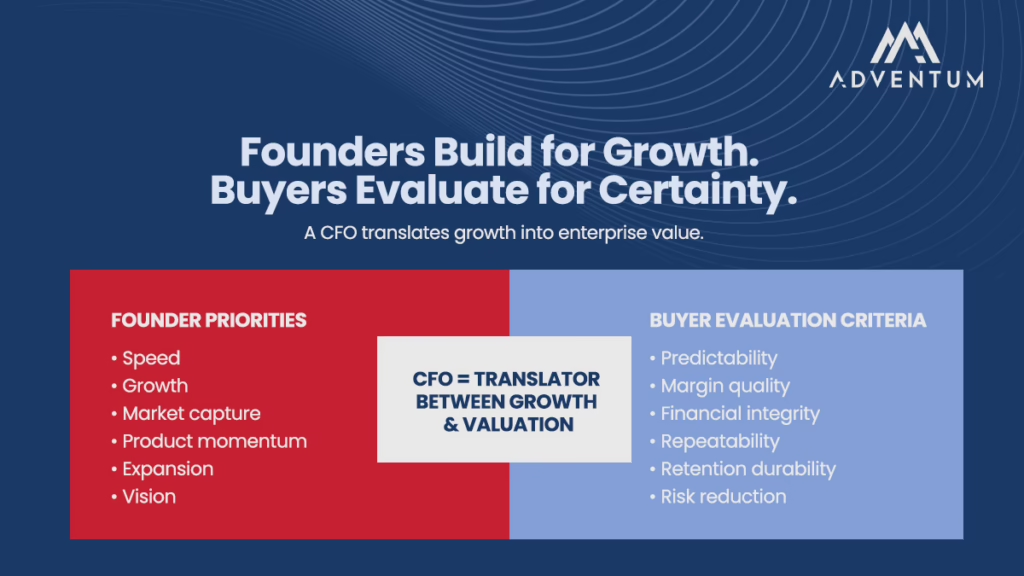
There can be gaps between how companies are built and how they are bought. Founders build around opportunity, while buyers evaluate around certainty, including risk, repeatability, and financial integrity.
A CFO bridges that gap and can boost profitability. They reframe growth through a new perspective, including:
- Growth rates vs. how durable that growth is
- Spending vs. what returns capital generate
- What could happen vs. what is most likely to happen
This is why companies without CFO-level thinking often fall into startup traps or struggle during diligence. The narrative may be exciting, but the numbers don’t consistently support the story.
When Should You Start Thinking About an Exit?
Immediately.
Not because you’re planning to sell, but because every decision you make either increases or limits your future options.
Waiting until you’re close to an exit can introduce challenges, such as financial inconsistencies surfacing under pressure, reporting gaps becoming negotiation liabilities, and strategic decisions lacking historical context.
By contrast, early alignment creates compounding advantages.
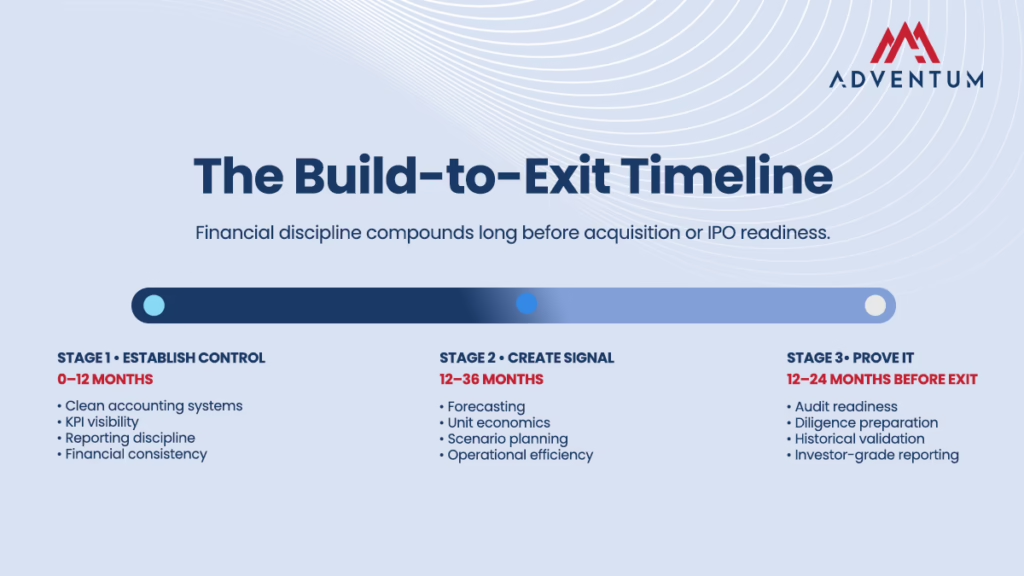
A More Realistic Build-to-Exit Timeline
Early Stage (0–12 months): Establish Control
- Implement clean accounting practices
- Define baseline metrics
- Build reporting habits
Growth Stage (12–36 months): Create Signal
- Strengthen unit economics
- Introduce forecasting and scenario planning
- Align financial decisions with long-term outcomes
Pre-Exit Stage (12–24 months before liquidity event): Prove It
- Validate assumptions with historical data
- Ensure consistency across all financial outputs
- Prepare for third-party scrutiny
At each phase, you’re aiming for progress that holds up under examination.
Where Founders Go Wrong Without Financial Leadership
Most exit challenges stem from a lack of structure behind that growth. Common failure points include:
- Growth without economic clarity on startup financial KPIs
- Financial reporting that doesn’t withstand scrutiny
- Lack of forward-looking board-level financial models
- Misalignment with investor-grade metrics
- Inefficient capital deployment or cash burn rates
What CFO-Level Execution Actually Looks Like
CFO thinking shows up in how the business operates day-to-day and how it communicates externally.
1. Financial Infrastructure That Scales
Before valuation comes validation, including GAAP-aligned financials, timely and accurate monthly closes, and systems that produce consistent, audit-ready financial reports to build trust.
Without this, every conversation with investors or buyers starts from a place of skepticism.
2. Decision-Making Anchored in Financial Reality
Strong companies model. CFO-level execution introduces rigor into:
- Pricing strategy and margin design
- Hiring and operational investment decisions
- Expansion financial planning and analysis
Scenario modeling becomes a core capability, allowing leadership to anticipate outcomes rather than react to them.
3. Metrics That Translate to Valuation
Not all growth is valued equally. Buyers continually prioritize consistency of recurring revenue, efficiency of customer acquisition, retention durability, and a credible path to profitability.
The Role of a Fractional CFO in Exit Readiness
For early and growth-stage startups, hiring a full-time CFO can be premature. But delaying financial leadership entirely is costly.
Fractional CFO startup services offer a middle path, bringing senior-level startup financial strategy into the business without full-time overhead. Their impact is concentrated in areas that directly influence exit outcomes:
- Building investor-grade financial models
- Establishing reporting frameworks
- Defining and tracking meaningful KPIs
- Preparing the company for capital events and diligence
- Moving from reactive to proactive finance functions
- Navigating investor relations
CFO service value is structural and can help transform financial operations into a strategic asset.
Startup Exit Strategy Checklist: What Buyers Expect to See
Exit readiness startup is measurable.
A well-prepared company typically demonstrates:
- Clean, GAAP-compliant financial statements
- Consistent, board-level reporting
- Clearly defined and tracked KPIs
- Robust financial models with scenario planning
- Transparent cap table and ownership structure
- Investor-ready reporting cadence
- A defined path to profitability
- Documented processes that ensure continuity
- Finance functions that scale with your startup
Aligning Exit Strategy With Founder Intent
Not every founder is building toward the same destination, and that’s where strategy must become intentional.
Defining the Outcome
- Are you optimizing for long-term independence or liquidity?
- Are you building for scale at all costs or controlled growth?
These choices influence everything from capital strategy to operational design.
Navigating Control vs. Value
Raising capital can accelerate growth, but it also redistributes ownership and decision-making authority. Understanding the trade-offs between dilution and enterprise value is essential for making decisions.
Ensuring Investor Alignment
Misaligned expectations between founders and investors can derail otherwise strong exit opportunities.
Clarity around timelines, return expectations, and exit pathways ensures smoother execution when opportunities arise.
FAQ: Startup Exit Strategy & CFO Perspective
What is a startup exit strategy?
A startup exit strategy is the structured plan for converting ownership into liquidity. From a CFO perspective, it involves building the financial systems and metrics that make that outcome viable and attractive.
When should founders start planning an exit?
At the earliest stages of the business. Early financial discipline creates long-term flexibility and improves eventual exit outcomes.
Do startups need a CFO early on?
Not necessarily full-time. A fractional CFO provides strategic financial guidance tailored to growth-stage needs without the cost of a full-time executive.
What role does a CFO play in exit planning?
A CFO ensures the company is financially credible by building models, establishing reporting standards, tracking key metrics, and preparing for due diligence.
How do financials impact valuation?
Valuation is driven by the reliability, scalability, and predictability of financial performance. Strong margins, recurring revenue, and consistent reporting increase buyer confidence.
What metrics matter most to buyers?
- Annual Recurring Revenue (ARR)
- Customer Acquisition Cost (CAC) relative to Lifetime Value (LTV)
- Retention and churn
- Profitability or path to profitability
How long does exit preparation take?
Typically 12 to 36 months, depending on the company’s financial maturity and operational readiness.
Exit Is a System
The companies that achieve successful exits don’t pivot toward readiness at the last minute.
They build with intention from the start, treat financial clarity as a competitive advantage, and make decisions that stand up to scrutiny long before scrutiny arrives.
A startup exit strategy CFO mindset can transform how that company operates, scales, and creates value.